

Have you ever made an Indian curry at one time and eaten it, put the leftovers in the refrigerator, and found that the following day, it tastes so different? The Curry is at times more rounded, richer, and deeper. In other instances it is thicker, hotter, sweeter, or less aromatic.
Your fancy is not alone in his opinion.
Indian curries are elaborate amalgamations of spices, aromatics, fats, water, vegetables and proteins, acid and in some cases dairy. The cooking of these ingredients combines them; however, their interactions do not necessarily cease as soon as you turn off the cooker.
When the Curry is cooked and then cooled and stored, and reheated, the resultant product will have a different feel and taste.
Knowing the reason why Indian Curry is different the following day can assist you in preparing better curries, in putting leftovers away, and reheating them without the loss of the qualities that made the original dish so tasty.
This guide will unveil what occurs to your Curry overnight, why certain of your curries are better than the rest, and how you can exploit their improvements.
Why Will Indian Curry Be Different Tomorrow?
A newly prepared curry has numerous separate flavor elements that are vying to be noticed. You can immediately pick up fresh fried cumin, piquant ginger, green Chilli, garam masala, acidity of tomatoes, or the fatness of ghee.
Immediately after the Curry has been cooled and allowed to rest, the general sensory balance could be changed. The fats will solidify and melt, the starches will absorb the liquid, and the most volatile aromas will evaporate; the aromatic compounds and spices will be scattered in the Sauce.
As a result, there will be no such thing as the same Curry you served yesterday as the Curry that you served initially.
The most important factors are:
– Flavour compounds redistribution
– Change in fat and texture.
– Lengthy moistening of spices and ingredients.
– Loss of some volatile aromas
– Starch-rich sauces.
– Perceived changes in chilli heat, saltiness, sweetness, and acidity.
– Effects of refrigeration and reheating.
All this occurs simultaneously, and this is why sometimes the difference may be very obvious.
The way resting alters the taste of Indian Curry.
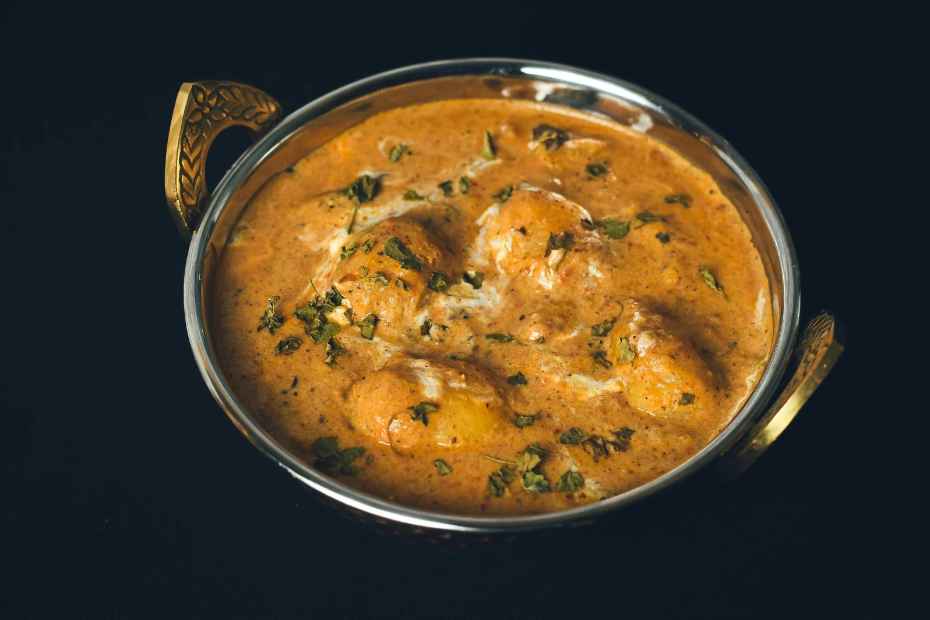
Spices Are Closer to Each other.
In Indian cuisine, there is often a combination of multiple spices. It can be a combination of cumin, coriander, turmeric, chilli powder, cardamom, cloves, cinnamon, black pepper, fenugreek, mustard seeds, and garam masala in any combination.
Single spices are sometimes the focus of a freshly cooked curry.
The Sauce is further mixed when it is stored. The oil or ghee in the Curry absorbs the flavor compounds that are more soluble in fat, and the rest are present in the water constituents in the Curry.
These flavours are once more redistributed as the Curry is reheated and stirred; when it returns, it is stirred, and in the process it is redistributed.
It may turn out to be a curry with fewer flavours of various types of ingredients and more of one mixed Sauce.
Aromatics Change Too
Onion, garlic, ginger, chilli, and fresh herbs add significant aromatic attributes.
Some of the volatile aromas include fresh ginger, coriander leaves, and some spices and are most particularly strong right after cooking. Certain of these aromas can be lost during storage.
This constitutes an interesting trade-off. On the one hand, the following day the Curry will be more cohesive and fulfilled, and, on the other hand, it will lack some fresh smells.
This is the reason why a sprinkling of fresh coriander, a squeeze of lemon, or a small portion of freshly prepared tadka after heating up can salvage the Curry left.
The Significant Value of Fat.
One of the largest flavour vehicles in Indian cuisine is fat.
Depending on the recipe, a curry may contain:
– Ghee
– Mustard oil
– Coconut milk
– Cream
– Butter
– Ground nuts
– Vegetable oil
Numerous aromatic spice compounds are fat-soluble. To release these compounds into the dish, cooking spices in oil, also referred to as blooming or tempering, is employed.
Since Curry is kept in the refrigerator, some of the fats can solidify. This texture and smell of the Curry therefore appear to be different when cold.
It will again melt the fats and spread out in the Sauce as it is heated.
This is one of the reasons why you are making a judgment of a curry out of the refrigerator, and you know practically nothing about what will happen when you have it heated out.
What To Do When Curry Tends to Grow Thick at Night.
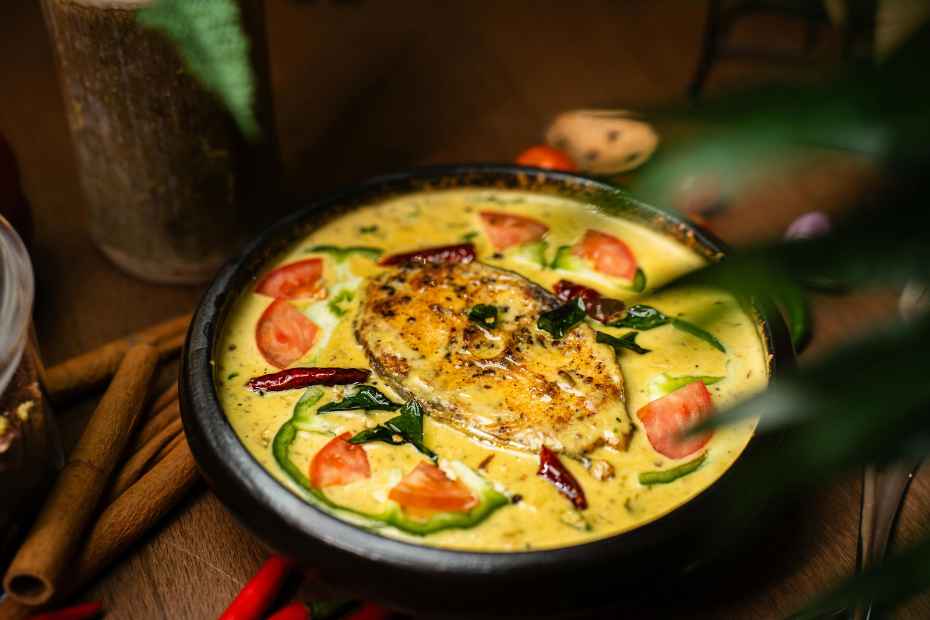
The sense of taste can be hugely influenced by a texture.
Cooked potato, lentils, chickpeas, beans, rice, flour, ground nuts or any other products containing a lot of starch can get very thick when refrigerated.
Starches are capable of retaining and absorbing water, and cooling may also change the shape of gelatinized starch.
Therefore, the relatively loose Curry which was served yesterday might be thick gravy the following afternoon.
It also influences the taste perception. Sauce that is thicker will make spices, salt, chilli, and acidity look differently balanced simply because of a reduced amount of free-flowing liquid.
During the reheating process, you may require a little water or stock to regain the original consistency.
What are the different Components of Curry doing at night?
| Curry Component | What may happen in store | Potential impact on the Next Day. |
|---|---|---|
| Ground spices | Greater uniformity of distribution of spices. | |
| Oil or ghee | Hardens when chilled | The consistency varies until it is heated up. |
| Potatoes | Moisten and absorb Sauce, thicker gravy | |
| Lentils | Continue to add water | Dal may become very thick. |
| Tomato bottom | Sharp may not feel so preponderant | Sauce may come out tasting more in tune. |
| Herbs fresh | Fresh herbs slowly fade away. | |
| Chilli | One can change the perception of the heat with the Sauce | Curry may be perceived as being either hotter or cooler. |
| Coconut/cream milk | Fills out once chilled | Thickened texture. |
| Meat | On experienced gravy | Sauce taste can be more assimilated. |
| Water | Tied up by starches and ingredients | Increased concentrated texture. |
The reason why some curries are better the following day.
Older curries are better, and most of the slow-cooked and gravy-covered dishes are fierce competitors.
Dal and Lentil Curries.
Dal tends to become a lot thicker in the refrigerator because cooked lentils retain water and add starch to the liquid surrounding them.
Its spices can also become more intertwined with the rest.
To reheat dal, we can pour a little water to achieve the appropriate consistency. The smells of the dish can be revived with another tadka prepared using ghee, cumin, garlic, dried chilli, or any other ingredients used in the dish when the dish was freshly cooked.
Rajma and Chole
Leftover bean curries- particularly kidney beans and chickpeas are good as well.
Their fat, heavily seasoned gravies are able to settle in and become stickier. The experienced Sauce is also applied to beans in the course of storage.
Gently heat again, and pour in additional water rather than boil the Curry crazily to uncontrollably thicken it.
Meat Curries
Chicken, lamb, goat and other meat curries are fine on the following day, as well, particularly when prepared with great amounts of onion-and-spice gravies.
The difference is that good taste does not imply that the food could just be put there to be stored overnight at room temperature. Sufficient cooling and refrigeration are required.
Potato-Based Curries
Potatoes are also known to absorb the moisture and flavours around them, and there therefore might be a great difference in potato curries the following day.
But even potatoes may become even softer and lose some of their textural contrast.
Coconut-Based Curries
Curries made with coconut milk may be made thick and rich when refrigerated. It is convenient to reheat them in a mild manner so as to preserve their texture.
The reason why some Curries are Fresh.
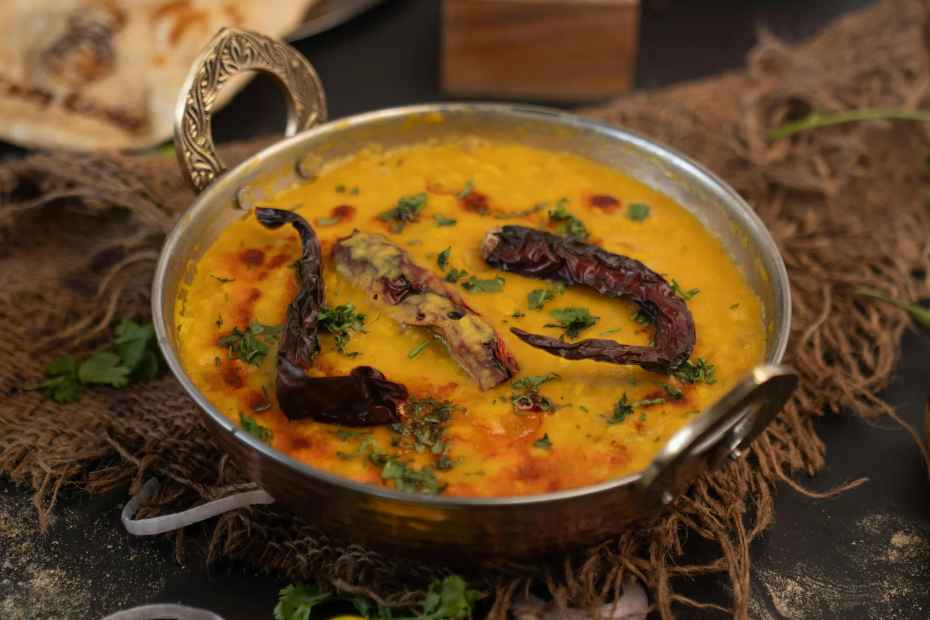
The notion that Curry is better tomorrow is too prosaic.
Certain dishes are premised around fresh aromas or contrasting textures.
Some of the flavor of fresh coriander, mint, fine herbs, crisp veggies, or freshly ground aromatic spices added to a curry may be lost in the refrigerator.
Fresh could also use a strong aromatic top note, which is not as intense the following day when garam masala is added.
And there are then actually two qualities at work:
Flavor integration can be increased during the resting period.
New aroma and feel are deteriorated during storage.
The best day curry is the next day strike.
Do Curry Buttons Get Jalapeno Overnight?
They say that the remaining Curry becomes hotter, which is not necessarily the case.
The significant sources of chilli heat are capsaicinoids. The food grid around and the manner in which you believe that the heat is the sole item that can transform spectacularly overnight.
When a sauce becomes thick, the transition between Chilli, fat, sweetness, acidity, and water takes place. The Chilli may, therefore, seem hotter.
Conversely, creamy, coconut milk, butter, or a high-oil-content curry can assist the heat to appear smoother.
Rather than thinking that the Chilli has become the same, but has developed some power overnight, consider the whole Sauce.
Does today become tomorrow?
The actual amount of salt does not wondrously increase once the Curry is refrigerated.
Saltiness can, but it is perceptible.
The richer or thinner a sauce is. On the other hand, the seasoning can be changed by other foods (potatoes, lentils, beans, etc.) in the dish.
That is why, when taking the Curry out of the refrigerator, you should not add salt.
Boil until it has reached the desired consistency, then stir and taste.
It is only after that you should season it.
The way to store Indian Curry.
After food safety, flavor is the second concern in food.
Do not leave Curry overnight on the kitchen counter to add flavor to it.
The U.S. Department of Agriculture recommends that refrigeration of perishable leftovers is done as quickly as possible. USDA guidelines recommend refrigerating leftovers within 2 hours, at 40°F (approximately 4 C) or less, and consuming leftovers within 3 to 4 days: Food Safety and Inspection Service.
In order to have more specific official data, see the USDA Food Safety and Inspection Service Leftovers and Food Safety Guide.
To cool a large amount of Curry, it is possible to pour the Curry into smaller or shallow containers so that it can cool faster. Store leftovers of the Curry in lidded containers: Food Inspection and Safety Service.
The question is how to heat Curry in the microwave and not break it.
Reheating does not simply consist of warming up yesterday’s food. The recovery of its uniformity and fragrance is a blessing.
Step 1: Check the Consistency
Cold Curry appears to be a lot thicker than it was originally.
Before determining how much liquid it will require, start heating it gradually and then determine the amount of liquid needed, since the refrigerated fats will melt with an increase in temperature.
Step 2: Add Liquid (when necessary).
Thick dal, rajma, chole, or gravy-based curries: Use a small amount of water or proper stock.
Add gradually. In places where the water is excessive, the seasoning will be diluted.
Step 3: Heat Thoroughly
In the USDA guidelines, it is suggested that leftovers be heated to an internal temperature of 165F (74C). Boiled soups, gravies, and sauces. The Food Safety and Inspection Service.
Step 4: Re-add Fresh Scents.
When the Curry has been cooked safely, a good-fitting ingredient to the recipe is added:
Fresh coriander can be added for herbal freshness to rejuvenate it. Aroma can be enhanced with a bit of garam masala. Acidity may be lemon or lime juice. Fresh ginger can be used to make certain dishes light, and a little tadka can be used to add freshly toasted spice aromas.
Do not need to add them all. Choose something that is fitting to the original Curry.
Step 5: Add Taste Prior to Adding Seasoning.
When the Curry is already hot and the consistency of the Curry is controlled, salt, Chilli, acidity, and sweetness can be determined.
This might be required to ensure a curry is not over-seasoned, as it appeared to be unusually heavily concentrated at room temperature.
Willful Preparation of superior Next-Day Curry.
In cases where you know you will prepare that day and in particular, then choose a dish that will be improved by a rest.
Curries made with gravy, and lentil preparations, as well as chickpea curries and most slow-cooked meat preparations are more suited than recipes where the flavor depends on fresh greens or crisp vegetables.
Cook the Curry, but without over-seasoning it. Cool and refrigerate.
The following day, reheat it properly, and add new notes and finishing ingredients to it.
This provides you with one side of the equation: the Curry, which has been left to rest, and some of the freshness of a dish that has been prepared just now.
The Reality behind the Next-Day Indian Curry.
No single chemical reaction has been identified that makes all the next-day curries taste better.
Rather, a number of changes occur simultaneously.
Spice flavours are spread. Fats chill and then re-melt. The texture of the Sauce is altered by starches. Ingredients keep on holding and absorbing moisture. Some of the volatile substances are less noticeable. The mixture is then reheated.
And this combination is what makes old Curry richer without necessarily being precisely the same.
It also gives the explanation as to why it is not sure that it will be better the following day.
A good rajma can be complemented by rest and by light Curry of fresh herbs and crispy vegetables; and, in fact, it is most appetizing when fresh.
Conclusion
The explanation of the difference in the taste of the Indian Curry the following day can be narrowed down to the fact that Curry is not a predetermined sauce, but a complex combination.
Sprinkling the spices to make them feel more at home, and starches and other things, modify the nature of the gravy. In the refrigeration process, fats are transformed, and fresh odours are lost. The other alteration occurs on reheating, in which there is melting of fats and redistribution of flavors.
To maximize effectiveness, it is best to store Curry, heat it completely and re-establish its original consistency, as well as to add new finishing ingredients where suitable.
It is not the Curry of the day before heated up. In most instances, it is a variation of the same dish.
Frequently Asked Questions
What is the reason why Indian Curry usually tastes better the day after?
Resting, too, alters the texture of the Curry, and the distribution of the many flavor compounds in it. Spices might seem to be more integrated, and the Sauce can be thicker, sacrificing a richer overall impression. Meanwhile, certain new aromas may fade away, thus not all curries get better with time.
Is it possible to leave Curry at room temperature overnight?
No. Perishable cooked food needs to be refrigerated in time. In its recommendations, the USDA recommends that refrigeration of leftovers should be done within a maximum of two hours, or an hour when the temperature is over 90F (32C): Food Safety and Inspection Service.
What is the maximum length of time of leftover Curry in the refrigerator?
The USDA says that cooked leftovers in refrigerators have a shelf life of 3 to 4 days unless refrigerators are used to keep the food. Heat up leftovers to 165°F (74C) prior to consumption.