
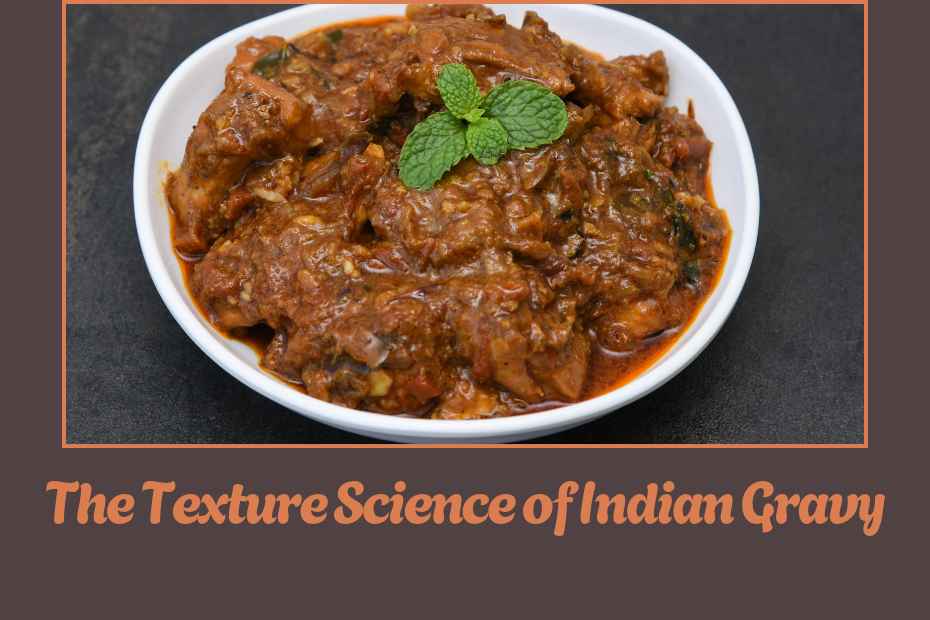
The Indian gravy can be made with the correct spices just and failing. It is not normally a question of taste. It is texture.
One can only guess how the silky type of butter chicken gravy at the restaurant and the rustic type of chicken curry at home will differ. They may be prepared both using onions, tomatoes, ginger and garlic and spices but the experience is completely different.
One is sprinkled with a smooth coating on the tongue and the other sprinkled with familiar pieces of onion, tomato, herbs and masala.
It is the difference which food science composes not ingredients.
The feel of an Indian gravy is affected by water evaporation, fat emulsification, vegetable fiber, protein content, starches, nuts, dairy products, blending, straining and time spent in cooking. When you know these variables then you can purposefully curry it silky, thick, rustic, creamy or a mixture of those.
Not only does this guide provide the explanation of the science of texture of Indian gravies but much more importantly it also explains to how to achieve the same texture within the comfort of your home kitchen.
The importance of Texture in Indian Gravies.
How we feel flavor is influenced by texture.
The gravy is not thick and flows quickly along the tongue and can appear light. A spicy gravy is a gravy that is mixed with spices and fat and it espouses ingredients more strongly. The gravy rich smooth texture gives it a smoother and more refined feel and rough gravy gives it a natural juxtaposition of bites and a homemade taste.
There is never correct curry texture.
There are dishes which require various structures. Korma is a raggedy chicken curry that can be improved with a creamy sauce, nuts and nuts, are present and the onions and tomatoes are a bit coarse.
It does not aim to smooth out all of the curries. The reason why it is essential to know what makes every texture and the technique to employ depending on the dish.
Agriculture or Science of the texture of Indian Gravy.
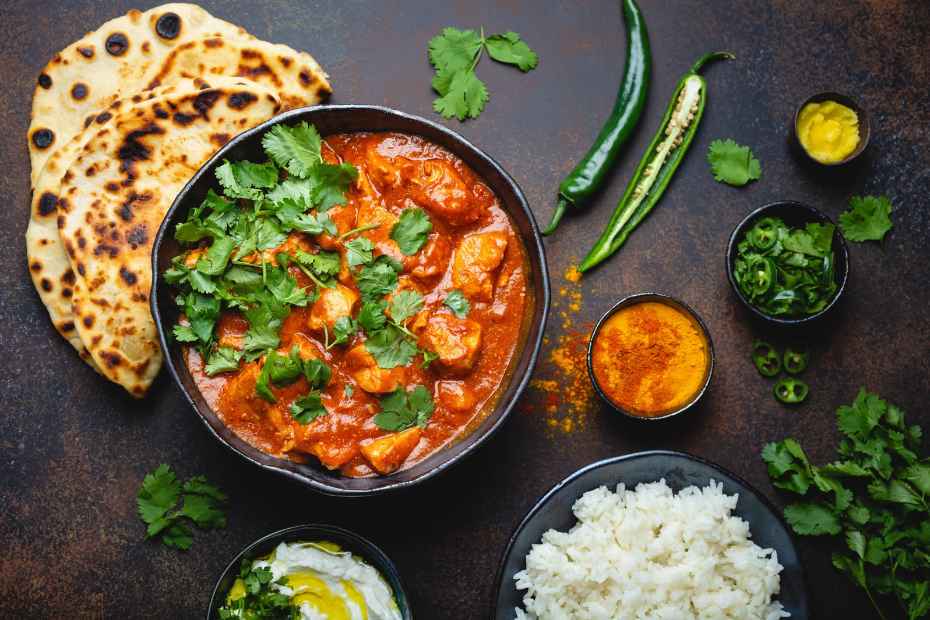
Most of the curry gravies are composed of blends of water, fat and dissolved constituents and solid particles suspended.
It can be onions, tomatoes, nuts, seeds, dairy, vegetable or spices in a grinding to a fine powder. The last consistency is biomodified by modifying their size, concentration and their interaction with water and fat.
On four processes is specially significant.
1. Water Reduction
Evaporation is the easiest method of thickening numerous gravies.
An uncovered curry is boiled and the water evaporates in the form of the steam. The remaining sauce is more concentrated and thus, the flavor and texture of the sauce is more stood out.
This is how a watery tomato-onion curry is able to become thick without any flour or cream or any other thickener.
There is a limit to reduction though. If the gravy is already spicy/salty then one would have too much reduction and these flavors will prevail.
2. Emulsification
Oil and water are not very soluble. There are numerous rich gravies of these two.
The proteins as well as the other compounds are also well mixed together to enable more stable mixture to be formed in which case tiny droplets of fat are dissolved in the whole liquid.
This aids in the creamy mouth-associated texturing that pertains to majority of restaurant-style gravies.
An oil-slick or grainy or oil-separated gravy may take the place of a broken or improperly mixed gravy.
3. Suspended Solids
The solid contents of onions, tomatoes, cashews and almonds, seeds and vegetables are left in a curry even after cooking.
The solids when blended help to give rise to body.
When left in a rough state, you can have a rougher texture.
To get the mixture smoother, a straining of the mixture will remove larger particles and you will have a smoother sauce to drink.
4. Starch and Protein
Starches are water soluble, and can swell to enormous viscosity. One can then modulate a body of a curry with the help of potatoes, lentils, chickpea flour and some pastes of seeds and nuts.
The other factor that influences structure is proteins. Protein rich foods like yogurt, milk, cream, nuts and others can affect both the viscosity and mouthfeel though some must be regulated to preserve their quality by ensuring that the temperature does not rise to cause curdling or separating.
Indian Gravy Indian Gravy Texture Guide.
| Desired Texture | Useful Ingredients | Main Technique | Best Approach |
|---|---|---|---|
| Silky | Onion, Butter, Tomato, cashews. | Blend and strain | Bake completely then mix up. |
| Thick | Onion paste, seeds, nuts, lentils. | Reduction and concentration | Simmer uncovered gradually |
| Rustic | Onion and tomato cut in pieces. | Minimal blending | Maintain ingredients a little coarse. |
| Creamy | Cream, yogurt, cashews | Gentle incorporation | Add dairy carefully |
| Smooth | Cooked vegetables, onion, tomato | High-speed blending | Blend till well mixed. |
| Light | Stock, water, tomato | Limited reduction | Avoid excess thickeners |
| Nutty and rich | Cashews, almonds | Soak and blend | Take a fine paste and add then |
In order to make a silky Indian gravy, how to do it?
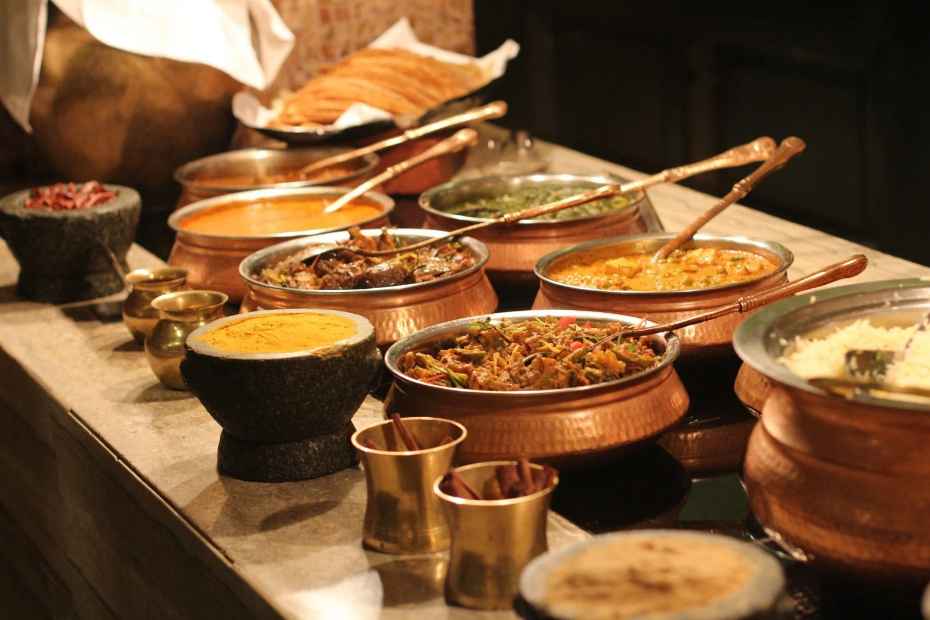
Silky gravy may not feel very thick but it must feel smooth.
The first one is well cooked ingredients. Onion (raw or undercooked) is not going to go in a blender and come out a product that has become a beautiful smoothing product. It can still have a coarse texture with its fibers and can have an unpleasant taste.
Cook onions and tomatoes till quite softened.
The following activity is to add your base with the instructions of your blender company on hot liquids. The more finely the particles are, the smoother the texture.
We strain the gravy through a fine strainer in order to get the appearance of very elegant. This eliminates tomato peel, seeds, and pieces of courses spices, and vegetable fibers.
Strain the sauce and pour it into the pan again and add water, stock, milk or other suitable liquid to get the sauce to the required consistency.
An endful smattering of butter or cream can provide a smoother mouthfeel.
The Cashew Technique
In Indian gravies that are high in fats, cashews come quite in handy.
They are to be beatened, and plenty of liquid added, to form a thoroughly smooth paste. The introduction of coarse paste of nuts can accomplish the opposite of the intention, and make the gravy coarse.
Cashew paste works particularly well in the dish reminiscent of korma, shahi paneer and other North Indian gravies.
Prepare an Indian Big Thick Gravy.
Thickening does not necessarily imply addition of cream.
The mere ability to control water is actually one of the best methods.
Reduce the Gravy
Heat it uncovered, on low. The gravy does not necessarily need to be stirredred on what happens is that the concentrated sauces are likely to be attached to the pan more easily than otherwise because of thickening.
Reduction does not introduce a new succession of thickener but just maintains the original one.
Add More Onion Base.
Onion is roasted to provide it with natural body.
Onion solids add thickness to gravy, when it is cooked soft and then mixed with the gravy. A reason is that heavy bases of curry which entail onion might feel thick excluding flour or cornstarch.
Use Nuts or Seeds
Ground cashews, almonds, melon seeds, or sesame seeds (commonly used in the recipe) would provide a lot of body, traditionally.
Use them intentionally. When added in excess, the nut paste can make a healthy curry into a thick paste.
Lentils or Vegetables.
Natural thickening Using this method, one can make some gravies as a kind of cooked lentils or pulverized square vegetables.
One can add body with a bit of mashed potato, cooked lentil, pumpkin or any other such ingredient, but the flavor will be changed. This trick is the best in circumstances where the ingredient is an addition to the recipe.
And how to make a rustic Indian Gravy.
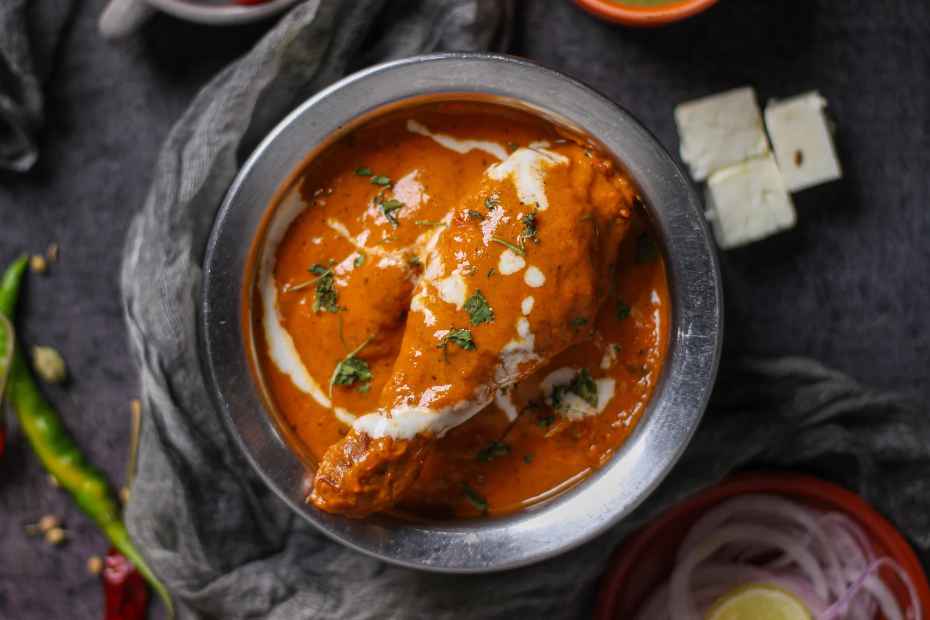
The real gravy applauds texture, rather than eliminates it.
Instead of pureeing them into an even, smooth and uniform puree using onions and tomatoes, chop them by hand or pulse a few times.
Saute the onions until soft, without losing their shape. Indeed, Add tomatoes (chopped or crushed) and boil before they begin to rupture.
Seed spices can be fully or partially ground which can also provide texture and flavor.
The significant difference is between undercooked and rustic.
Slices of it well cooked tomato and onion might be pleasant. Raw tasting onion, thick tomato skin, uncooked spice paste, etc. are not not only tasteless but unpleasant since the dish is supposed to be rustic.
Rustic texture needs to be intentional.
Creamy Indian Gravy What to make Indian Gravy Creamy.
Heavy cream is not the only source of creaminess.
Cream is an obvious ingredient, but alternatives to cream can be used to produce many different types of creamy mouthfeels: yogurt, cashews, coconut milk, and puree vegetables can all be used.
Cream
At Cream, fat is also present, and it deadens the sensations of sharp and acidic, and spicy flavor. Put it into the successive cooking stages and save it the unnecessary violent boiling later.
Yogurt
Yogurt is sour and creamy.
To reduce the risk of curdling, smooth the whisked part with the limb, before adding it. Easier to incorporate, this has been brought close to the temperature of the curry, through the slow addition of a small portion of warm gravy.
Once it has been put in stir heavily in the beginning and control the heat.
Coconut Milk
Another kind of richness developed on coconut milk and it has its way of naturally in most of the preparations in South India and coastal culinary.
It can also be used to turn a gravy which would otherwise be creamy without dairy into one, but its distinctive flavor prevents it being used as an equally neutral substitute in all curries.
Nut Pastes
Manufacturing dairy is, however, not exploited fully since they become rich with finely blended nut pastes.
Nuts are also good sources of fat and solids, which makes them capable of making a gravy to be thicker and richer.
Juxtaposing the nutritional content of the food materials such as yogurt, cream, milk and nuts with the USDA Fooddata central database is an authoritative source of food-composition data of the US government to anyone.
Why Restaurant-Style Gravy Can be so Smoother.
Indian restaurant preparations of gravies usually have a combination of procedures that produce textures rather than an ingredient, which is a secret.
The bottom may be correctly cooked and thoroughly mixed and strained, and up to a desired consistency and covered with fat or dairy.
The solutions to various problems are the stages.
Melting lessens the particle size. Remaining coarse material is removed by straining. Reduction Tames water. The fat are greasy and oily.
It is a stratified process and that is why even the curry that we make at home cannot turn into a restaurant-style one by merely adding cream in it.
How To Make Your Indian Gravy Grainy.
Graininess may be created in different sources.
Another frequent offender is a nut paste that is not blended properly. Ground spices which have not had much opportunity to moisturize and cook can likewise be used to give a rough feel.
The other type of graininess is a result of curdled dairy.
When it happens to be yogurt, never pour cold yogurt in a hot and vinegar coloured gravy. A gradual incorporation and whisk is the more in control.
When it comes to nut based sauces, then they also require the nuts be moistened and that they be mashed to ensure that they do not contain huge pieces that can be sensed.
Assuming that vegetable fibers cause the issue, further blending then a straining can save the texture.
Why Your Gravy Is watery
There is too little water in the vegetable added, insufficient cooking time, liquid the vegetable releases or too little solvent based has too much water.
The gravy is supposed to be simmered an uncovered gravy then a thickening powder is added.
Allow evaporation to take place.
Just in case the curry is yet to receive a body, consider adding the base with more cooked onion, tomato, nut paste, lentils or any other ingredient that is in keeping with the meal.
One should not add too much thickener at a time. Very quickly, a curry will turn into pasty.
Why Your Gravy is too Thick.
Curry can be both made and unedited easily.
Add, in the little, less hot water, stock, or milk, or any other liquid you happen to have that is good in the recipe. Stir vigorously at the same time and then get your mind up.
Kindly do not send the first large amount, and add in smaller amounts.
In always remember, that dilution removes flavor, as compositions. Then due to good taste add or subtract some more or less salt, acidity, spice and richness to the curry on taste.
The use of Fat as a Gravy Texture
Fat is not only good to make food rich.
It changes the feel of the mouth, and aids the transfer of fat soluble flavor and aroma compounds. Butter, ghee, cream, coconut milk, cooking oils can thereby influence the feel as well as the taste of a curry.
However, fats are not necessarily good.
Too much makes it have an oily feel, instead of silky touch. The desired fat is just enough to perform the style of the gravy without being too much to overshadow the gravy.
A blend vs Straining: Who knew we needed them both?
Not always.
In the smooth curry in everyday life, the blending would be said to be the complete one.
It is better to mix then strain to obtain a very smooth restaurant-style sauce.
None of the above may be needed with rustic gravy.
Choose the technique depending on the effect that you want to achieve as compared to the notion that smoother is necessarily better.
Ways Not to Misuse Texture
One of the most terrible mistakes which could be committed is the struggle to rectify all the problems with texture utilizing cream. Cream is a good option to add richness but cannot salvage poorly cooked onions, rough and coarse nut paste, too much water or even big tomato skins.
The other mistake is that it involves putting ingredients together and making sure they are cooked without ensuring that they are cooked.
not too thin a taste, nor too fin. When the water evaporation is done, the salt, chilli, acidity and what other flavors that are present become concentrated.
And finally, allow carryover thickening. What seems like an ideal gravy boiling may prove to be much thicker in a few minutes.
The Ultimate guide on choosing the right texture of your Curry
Start with asking a question about the location of the gravy.
In food that has paneer or kofta, it has a creamy, thick sauce that contrasts the heavy food ingredients.
While the meal of meat curries can be shared between beef-based meat cuts, a rough onion-tomato gravy will compensate the heartiness of the meal.
The gravy in light dishes is not intended to overwhelm the main dish, and a smooth sauce will be used to hold the main food.
Opul celebrative curries can be made of nuts and dairy.
The finest is the texture which prefers the dish over attracting it.
Conclusion
Being aware of the science behind it, of the traditional Indian gravies, in matters of texture, will give you a lot more control in how the cooking is done.
In order to get a silky gravy, cook base to a whole and blend thoroughly where necessary and strain. To achieve a thick gravy you need to control the amount of water used by adding ingredients such as onions, nuts, seeds, lentils or vegetables in order to gain some volume. Maintain cooked ingredients in a crude condition, mechanically. To prepare a rustic gravy. In order to prepare a creamy gravy, replace the cream, yogurt, coconut milk or creamy smooth nut pastes depending on the type of dish.
Above all, do not consider texture as a last minute thing.
Choose the texture desired to cook. Then measure the particle size, moisture, fat and the time of heating and cooking time in the beginning. It is far simpler to create the correct Indian gravy when the rules have been known.
FAQs
How do I make Indian gravy silky smooth?
Boel tomatoes and onions until tender, and mix the curry base, and strain it through a fine- mesh strainer. A little butter, cream or finely blended cashew paste can also be added to provide a mouthfeel.
What is the easiest way of thickening Indian gravy?
To put it in a perspective start by simmers of the gravy without the lid to take away some water. Cooked onion, cashew paste, lentils, seeds or mashed vegetables can also add thickness to the recipe, in lieu of thickeners.
Why does my grains of curry after adding yogurt?
When subjected to excessive exposure to high heat or to an acidic hot sauce, yogurt may separate. Blend it, add it slowly and stir, maintain low cooking temperature to minimize the chances of curdling.