
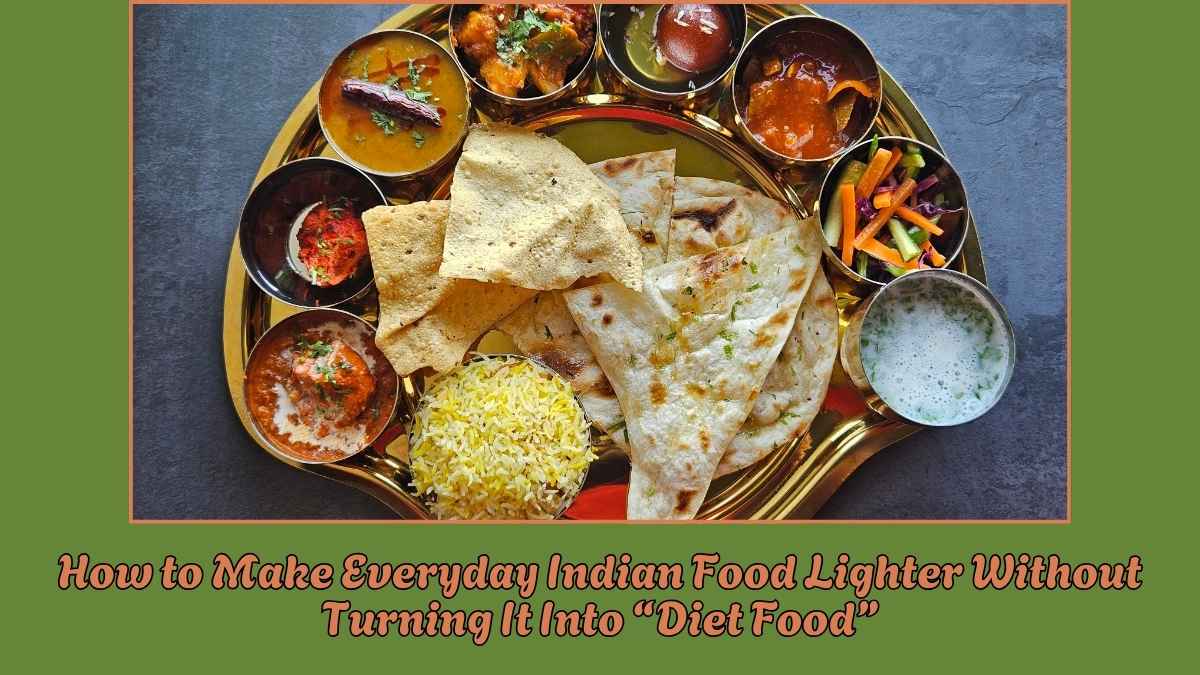
Diet Food: Indian food need not be made monotonous, boiled and full of salads due to your wish to eat lightly.
Even a typical breakfast or dinner at home of dal, sabzi, roti, rice, rajma, chole, paneer or chicken can be already prepared of healthy products. The problem is normally in the quantity of cooking and mixing of said ingredients.
The extra oil in the tadka, plenty of butter at the finish, cream in a gravy, fried edges, and colossal amounts of food could leave an otherwise well balanced meal quite hefty.
The solution is not to to come up with substitute so-called diet food.
Rather, settle down to a bare minimum to your day-to-day cooking. Hold the onions, tomatoes, ginger, garlic, chillies, cumin, coriander, turmeric, garam masala, fresh herbs and other ingredients that make the Indian meals delicious. Change the sources of supplemental fat, salt, sugar or other calories that the meal has.
This is a useful way of making the food consumed by the Indians everyday lighter without making it too unsatisfactory so that the entire family might not be able to consume the same food.
What Does Lighter Indian Food Thing?
Diet Food: Light meal does not mean that one has to consume a meal that is very low in hitting calories.
Consider adding to the beauty of the plate and eliminating those little things that may contribute little or no flavor or pleasure.
That could mean:
- consuming a little bit less oil in a sabzi.
- dal made with whole grain, and more vegetables to it.
- consuming less of cream-thick curry (drinking more water).
- no-cream tomato-onion gravy.
- roasting or grilling as opposed to deep-frying.
- adding fewer of rice to the plate and more vegetables and protein.
- with the addition of yogurt to add creaminess.
- does not pour out of the bottle.
The changes might be insignificant on their own but they are necessary as they are done by people hundreds of times a year.
MyPlate USDA suggestions also focus on the diversity in the vegetables, grains and protein food and focuses more on the food rich in nutrients and restricts saturated fat, added sugar and sodium. MyPlate
1. Promote Oil, but not to abandoned.
Diet Food: Among the simplest areas to gentrify Indian cooking is oil.
This does not mean that you will cook without oil.
One of the suppliers of flavour and culinary outcomes is fat. Spices are known to bloom on fat, roasted onions containing a little bit of oils and tadka can makes otherwise simple dishes of dal one.
The issue is quantity which is not regulated.
When pouring out oil with an enormous bottle into a kadai, it is very easy to pour in excessively than you had envisioned.
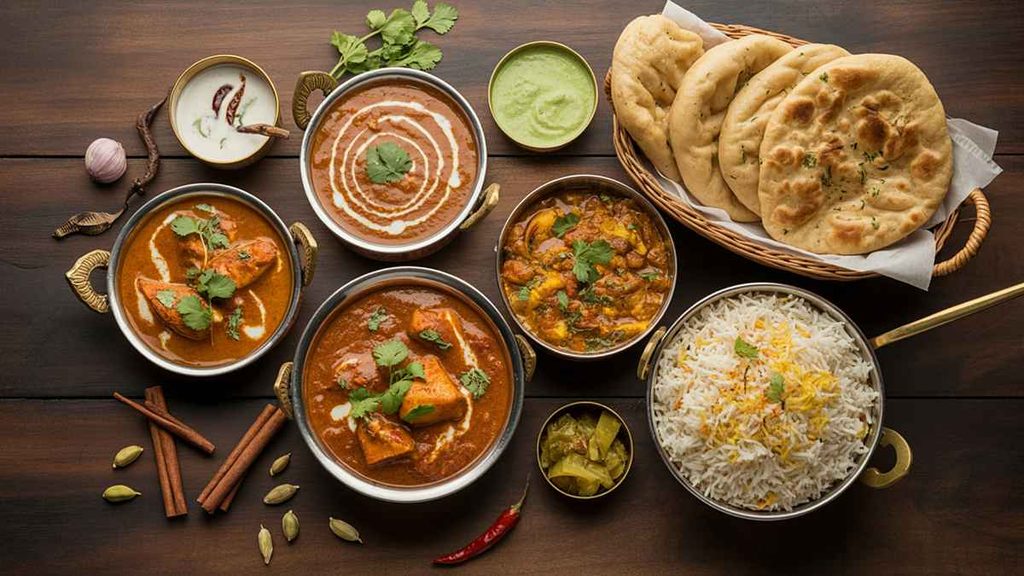
Check Before You Fill
Measure the amount of oil needed to cook the whole dish prior to cooking it.
On one occasion, when the masala appears arid, avoid the urge to pour in additional oil but simply sprinkle with the water, carry on with the cooking process.
Moisture will be emitted by tomatoes and onions when cooked.
It is still possible to get a well cooked masala without a layer of floating oil surrounding it.
USDA also recommends that the amount of saturated-fats should be minimal yet, it will be better that the sources of unsaturated-fats i.e. vegetable oils should be consumed instead of the intake of solid fats. MyPlate
2. Add Flavor, and then put in larger quantities of fats.
This is among the reasons they add more butter, ghee or cream due to a dish appearing to be lacking something.
Fat is however not to be the sole rich source.
Some dozens of other ways bring the richness of Indian cooking to bear on you.
Use:
Fresh Aromatics
They could be onion, ginger, garlic, green chilli and fresh coriander to have a strong base of flavours.
Roast the onions when ready and never wanting to add more butter afterwards.
Whole Spices
Such minuscule patches of cumin seeds, mustard seeds, bay leaf, cinnamon, cloves or cardamom have the power to alter the fragrance of a whole dish.
Toasted Spices
It is possible to enhance the smell of spices by roasting them in short term.
Burning them may result in burnt spices and it is enough to burn the entire dish.
Acidity
Occasionally a curry which seems flat does not require additional oil or salt.
It needs acidity.
You may take lemon juice, tomato, amchur or a piece of tamarind, as the recipe suggests.
Fresh Finishing Ingredients
It can be prepared using coriander, mint, sliced ginger, roasted cumin powder/ kasuri methi which will add a strong flavoring touch and minimum amount of butter is involved.
3. Have Vegetables: Have shaded yellow circle.
Among the simplest actions is not by killing food, but by adding more vegetables.
According to the USDA, vegetables are capable of providing fiber, potassium, folate and both vitamin A and vitamin C (most vegetables are low in fat and calories, prior to their addition to the food with sauces and seasonings).
- Indian cooking is in unison with this law.
- You may choose vegetables to recipes that you already prepare.
- Spinach: Mix with dal, Peas: Mix with pulao, carrots and beans: Mix with pahi,capsicum and paneer: Mutton and cauliflower: Mix with khichdi (mixed vegetables).
- You should not make all your meals a vegetable bowl.
- One can simply change the ratio by simply modifying it.
4. Enjoy Dal, Beans and Lentils on an average rotation
This is just immense potential in the Indian kitchen in terms of easy protein-rich foods that are in turn vegetarian.
Dal, rajma, kala chana, kabuli chana and lobia among other pulses can be prepared in a meal on their own as opposed to being served with a small serving each time.
Beans, peas and lentils are some of the protein foods contained in the USDA information about diets. MyPlate
The significant aspect is preparation.
The straightforward lentil-based dal prepared with tomatoes, garlic, turmeric and tadka is the contrast of a restaurant-cooked food made of butter and cream.
They both may be tasty, and they do not have to play an identical role in daily meals.
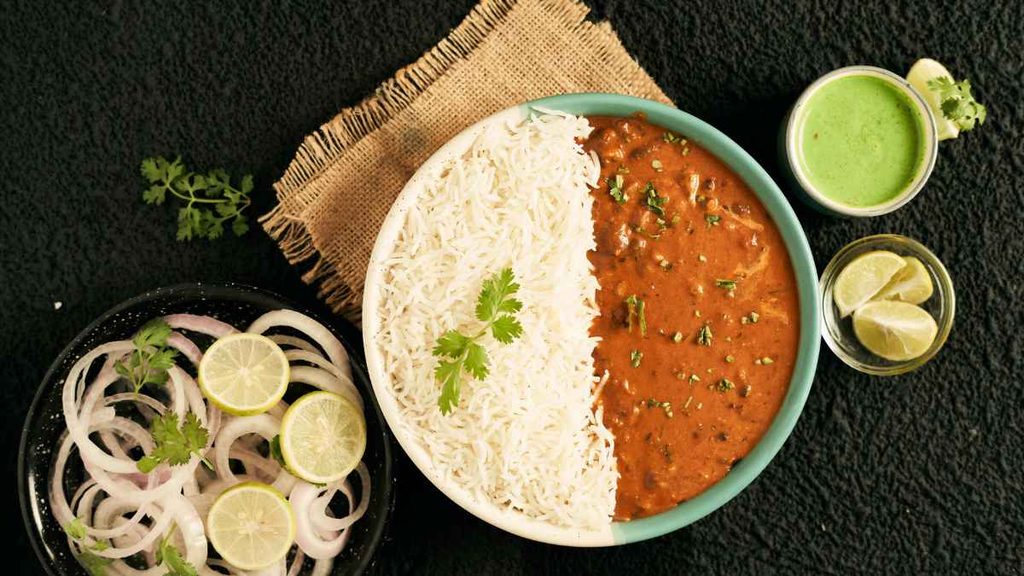
5. Make Creamy Curries without Cream.
The thickness is not necessarily attained using heavy cream.
You may experiment with:
- mash-up tomato and onion cooked.
- plain yogurt
- blended vegetables
- a teaspoonful of cashew paste.
- mashed dal
- pureed spinach
- cooked pumpkin
- milk or low-fat dairy instead of the high-fat dairy, in some instances.
The aim is not to make the imitation of the original recipe.
In fact, the dishes are reliant on cream, butter or nuts to recognize the dish. You may have them as you like.
Every day you can do the majority of the cooking but you are less bound up.
Don’t Change the Dish, Change the Cooking.
With no need to necessarily quit drinking your favorite foods.
There are occasions on which you just require an alternative way of cooking.
| Everyday Food | Heavy Approach | light everyday Approach. |
|---|---|---|
| Aloo | Deep-fried purpose | Deep-fried small pokeiness. |
| Paneer | Stirred into curry | Stirred before stir through curry, or scalded (lightly) |
| Samosa-style filling | Fried pastry | add filling to roti/Wrap. |
| Chicken | Deep-fried | Deep-frying, tandoori-grilled or baked. |
| Dal | Small aromatic tadka, | Heavy butter/cream finish. |
| Raita | Thick whitishigravy | Saheloan yogurt cucumber/spices. |
| Pulao | Large amount of ghee | Small amount of more of the vegetables. |
| Sabbi | Fried fish | Fried in oil. |
| Papad | Fried | Roasted |
| Pakora vegetables | Deep-fried most of the time/Air-fried/baked everyday. |
The substitutions do not necessarily need to be all of the time.
The challenge is to make your everyday fashion of food.
7. Smart with Roti and Rice
Carbohydrates are not automatic to render an Indian meal unhealthy.
Both rice and roti may be a part of a balanced meal.
In their company and what they embrace goes further and further.
A dish of a big heap of rice and a little spoon of dal is highly dissimilar to a dish of a moderate amount of rice and dal, vegetables, yogurt and salad.
The same applies to four rotis prepared using butter and a heavy curry which are prepared using a different meal to prepared two rotis using dal, sabzi and raita.
And the whole grain selections also can be tested. Among the suggestions USDA offers is ensuring that mixed grains include some whole grains as they will be a combination of healthy diets. MyPlate
8. Notices the Extras of the Main Meal.
It is not the problem due to the curry at occasion.
The extras are.
- Visualize a very rational offering of rajma and rice.
- Serve fried papad, pickle and a sweet beverage and dessert.
- The meal has evolved so much without any change of the rajma.
- Such foods do not have to be forbidden by you. Instead of selecting what extras are worth the money, make a decision.
- Suppose you feel like almost having a dessert, be and take one and perhaps the sweet drink.
- Use if less pickle you are a pickle lover.
- When papad is included in the meal, roast it, rather than just frying right away.
This style is much less confining than having a long list of proscribed foods.
9. Use Simple Indian Plate formula.
To make daily meals rich in calories, it is not necessary to add up all the calories.
Think in components.
Vegetables
Include sabzi, salad or vegetables which are included in another dish.
Protein
Use your choice of dal, beans, chickpeas, paneer, yogurt, eggs, fish or chicken and boost your diet.
Carbohydrate
It will add some roti, rice, millet or any other grain.
Flavor
Add Chutney, herbs, lemon, spices, pickle or mini tada.
This is in order to come up with a meal yet which will still appear and taste like a normal Indian food.
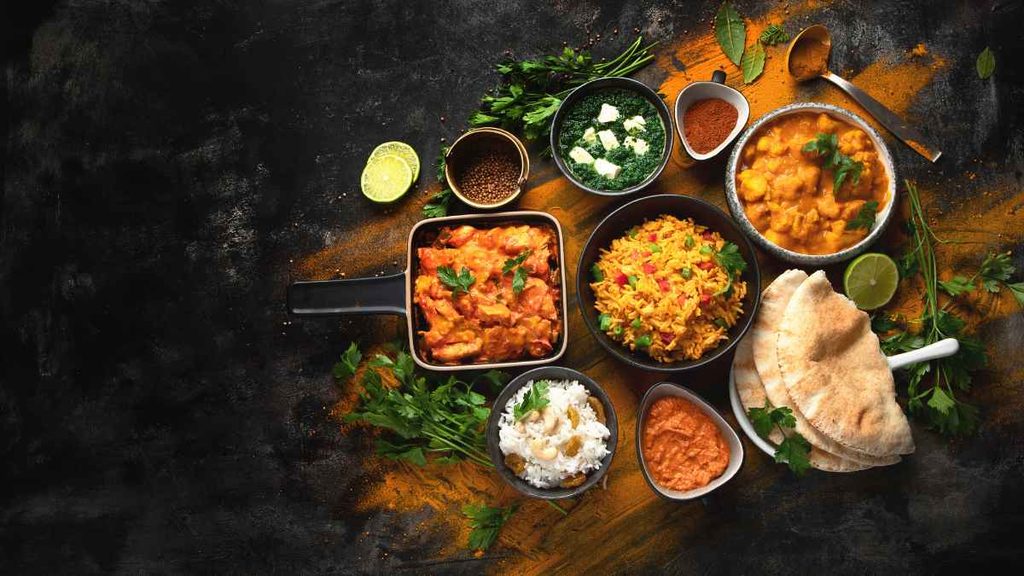
10. Maintain Restaurant-type food.
One of the biggest discrepancies that should be mentioned comprises that between the Indian cooking of the day and the Indian cooking of restaurants.
They are applied in a number of ways.
Dining restaurant meals can be based on a lot of butter, cream, oil, salt, sugar and thick gravies since the ultimate goal is the optimal instantaneous flavor.
There is nothing wrong that it will take you towards the time when you would want such dishes.
The issue begins when the home cooked paneer curries were modified into restaurant curries shahi paneer and as well as the dals were modified into dal makhani.
on Tuesday-night you need not eat your dinner like it took at a banquet dinner.
The simple dal, jeera aloo, roti, cucumber and yogurt can be satisfying, as it is quite simple.
11. Reform Not the Processes at night.
An overall transformation of the way you make your meals (at night) will probably complicate the daily preparation of your meals.
In making a choice of one or two changes, choose 2-3 changes initially.
For example:
- Figurure out the cooking oil.
- Increase intake of vegetables in lunch or dinner.
- Bake foods that you would deep fry.
- And once they become a habit, effect another change.
Are also included in the broader idea in the USDA MyPlate materials, how little actions of eating habits can lead to future eating healthier behaviors in the long-term. MyPlate
Go to USDA MyPlate site to have overall information about healthy eating.
It is an educative Case Study: Crack a Lighter Indian Dinner
Assume dinner is paneer curry, rice and roti.
You need not substitute it with fresh grilled vegetables and vegetables.
- Rather, prepare paneer in onion tomato gravy with the required amount of oil. Garnish with capsicum or peas or spinach, which could be appropriate to the dish. Please do not fry the paneer, then add.
- As an alternative to cream, use yogurt or onion-tomato masala (blended) instead of cream.
- Eat typical serving of rice or roti and cucumber raita or salad.
- Add coriander, kasuri methi and garam masala in the curry.
- You have paneer curry but.
- Newly prepared more befitting any common meal.
Conclusion
Lightening Indian every day food has not been the metamorphosis of dal, sabzi, paneer, roti and rice into diet food.
Knowing where your unnecessary heaviness is laid in what you eat.
Do not pour but measure oil. Add flavor with spices, acidity and fresh herbs. Consume large quantities of vegetables, consume lentils and beans. Grill, roast or pan-cook foods which are not to be deep-fried.
You should eat moderate portions sparingly, and only on those occasions when you happen to want to indulge yourself, simply extraordinary rich restaurant-fancy recipes.
Most importantly, keep in mind to make the food recognisable.
Some of the day-to-day eating systems which give optimal results in terms of providing the lowest calorie meal at any given time are not necessarily the best. One that turns out to be the healthy and good food that it should be made out to be in an easily prepare and eat tomorrow kind of food.
FAQs
Can Indian food be healthy without using very little oil?
Yes. Not all the time the purpose is to cook without oil. A good middle ground would be to add the necessary measured quantity of oil with reliance on spices, aromatics, herbs and acidity to add more flavor.
What are good lighter Indian meals for everyday eating?
Daily use of basic foodstuffs like dal and roti and sabzi, rajma and rice, salad, vegetable khichdi and yogurt, chana masala and roti, vegetable pulao and raita and roast chicken and dal and vegetables. The same ingredients, method of cooking and the amount of food determine the final nutritional balance.
Do I have to stop eating paneer, rice and roti to make my diet lighter?
No. Not just sweeping them up but picking up the fun foods you already have, note their quantities, how to cook them and how other foods on the plate are cooked. Different vegetables can be included with a balanced meal that comprises of paneer, rice or roti as well as a proper source of protein.