
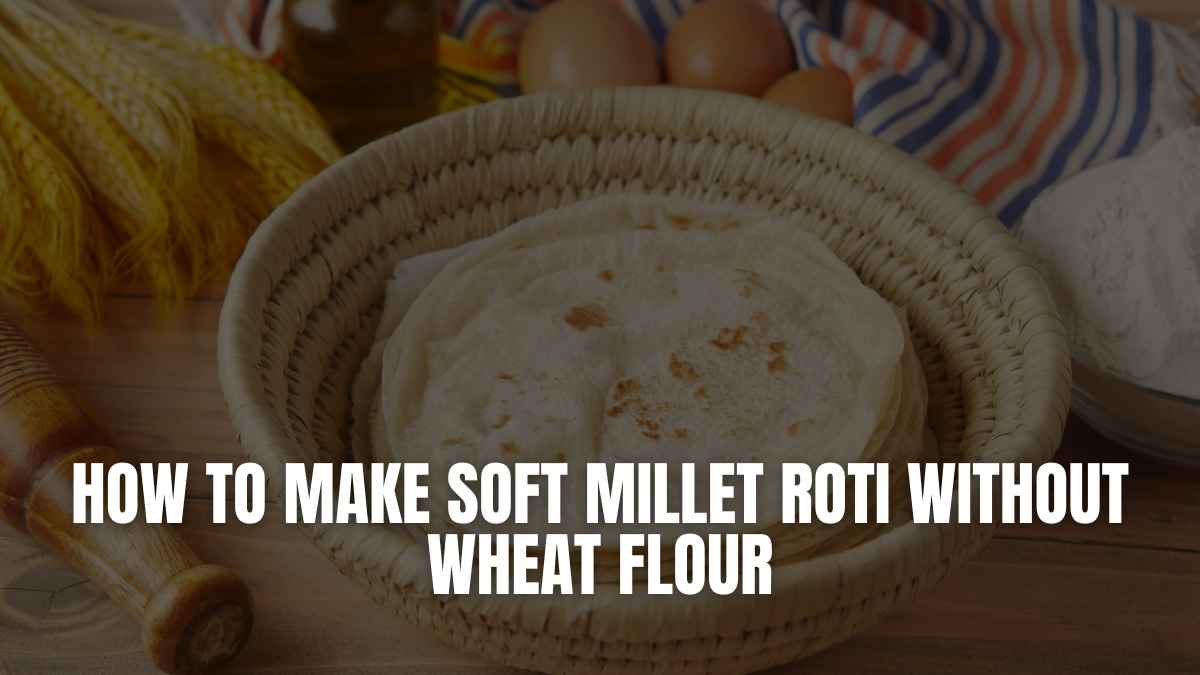
Soft Millet Roti: These are gluten-free, healthy rotis (also called bajre ki roti) which are prepared in a very short time. They are thick, juicy and delicious and would serve great breakfast, lunch or dinner with your favorite curry.
To make this easy roti, all you need to do is boil the water, add the flour and mix. Then, knead it till you have soft and pliable dough which looks and feels like real roti.
Best Soft Millet Roti Flour
When made properly, ragi rotis are soft and easy to roll out. They are an excellent substitute to those who wish to substitute rotis made of wheat flour with the healthier and more authentic tasting flatbread.
Ragi (finger millet) is a time-old favorite amongst most Indians. It contains naturally no gluten, and it is rich in dietary fibre thus being a perfect healthy alternative to those who cannot consume wheat.
It also gives a constant supply of energy during the day as well as maintaining a healthy weight since people are not over-eating, because they feel full.
Homemade soft, nutritious rotis, parathas, and theplas can be prepared using the soaked and sundried ragi flour of Super Millets.
Add some grated vegetables such as methi, palak or drumstick leaves to the roti dough to add additional nutrition. Knead the dough then and cook it on a hot tawa as you would a usual roti made of wheat. Enjoy!
Ingredients and Precise Measurements
Millet rotis are a simple, nutritious, and tasty, gluten-free substitute of the conventional wheat-flour chapati, parathas and theplas. The ingredients and the accuracy of measurements are the key of soft millet roti. Begin with homemade millet flour to get the freshest flavor.
Bring water to a boil, pour in flour in small portions and stir until there are no lumps. As soon as the mixture is like wet sediment, take it off the heat and allow it to settle.
Knead the dough to a soft state, adding some water when required. Roll and shape into a round shape. Bake in a hot tawa until it is puffed. Enjoy with a variety of dishes or curries.
Selecting the correct Water Temperature
You want the final product to be tender and tasty whether preparing rotis in the morning, lunch or dinner. The trick to this is to use boiling hot water rather than cold or lukewarm. Part of the cooking of the flour is done with boiling water and this is necessary to get a soft texture.
As you pour the flour in the boiling water, mix it in a hurry to ensure that it is well blended. After it has cooled sufficiently to work with, knead it with your hands until it becomes smooth and soft. Should the dough be dry sprinkle it with some water; should it be sticky add a little more flour.
Divide the dough into small balls then roll it out into rotis. In case you cannot roll the roti into a circle, then a rolling pin or a bowl can be used as a guide. You can add some greens like methi, spinach or drumstick leaves to the dough, if you want, to increase the nutritional value.
The rotis will swell on its own when cooked on low heat taking 30 seconds on each side. To make the chapati appear puffier you can also press it using a roti press in case of necessity. Dal (any of your favorite dals) or sabzi with ghee makes a good meal.
Rolling Roti No Cracks
It takes practice, whether you are preparing traditional wheat-based roti or millet-based chapati (or paratha) to knead the atta and roll it into flat, round, shapes. Fortunately, there are a few easy tricks by which you could ensure that your roti come out just right each time.
If the roti has cracks after cooking, it’s likely that the dough was overworked or the tawa wasn’t hot enough. Additional water to the atta and kneading it longer or less time on high heat should help.
Lumps or clots of flour (ghutliyan) in the dough is also an indicator that the atta is not well hydrated. To prevent this add the water in small bits and continue to knead until no lumps remain.
Roti on a Hot Tawa
This is a simple and fast method of preparing tandoori roti at home. The taste of this flattened bread resembles the original ones cooked in the tandoor, which are both burnt and smoky. Another way that you can use this tandoori technique to prepare regular chapati and other flatbreads at home is by use of this technique.
Take atta and place in a bowl then add water a little at a time and knead the dough to softness. Roll into thick chapati or roti by making lemon size balls, dusted with a small amount of wheat flour. Cook on a hot tawa. Before turning the chapati, make sure it is evenly cooked. Brush on top with ghee or butter and serve.
Common Mistakes and Easy Fixes
A few little secrets ensure that millet rotis are soft hours. The trick is with a thick dough. Best of all is a jowar or bajra dough, or half wheat and half either of those two. The jowar/bajra flour contributes towards the stretching of the dough and wheat makes it viscoelastic.
A single millet chapati will break. Make it 4 to 5 mm, or about twice as thick as a chapati of wheat. The roti becomes soft with no cracks to form, being thicker.
The other rationale to purchase small amounts of millet flour is the fact that it becomes bitter easily. This is due to the entire grains containing fat, 5 to 7 per cent.
The bran and germ layers are ruptured during the process of milling and lipases are released that begin to break those fats down into free fatty acids and volatile aldehydes. It is the aldehydes that make it bitter.
Your roti not puffing up on its own, then push it down a bit using a roti press. Ghee can also be added to the cooked roti and this will make them remain soft. You may also wish to purchase a roti maker, in which case, we suggest reading our roti makers comparison and our current selections.
However, to use them at home, a cast-iron or nonstick pan, and a dial that allows you to set a temperature are good enough.